
Search teams teach one rule: if you are lost, stay in one place and let the others come to you. A moving person is much harder to find. Lost children are usually found within a mile of where they were last seen. If you do move, follow a path, road or stream. One analysis found 60 to 80 percent of lost people near features like these.
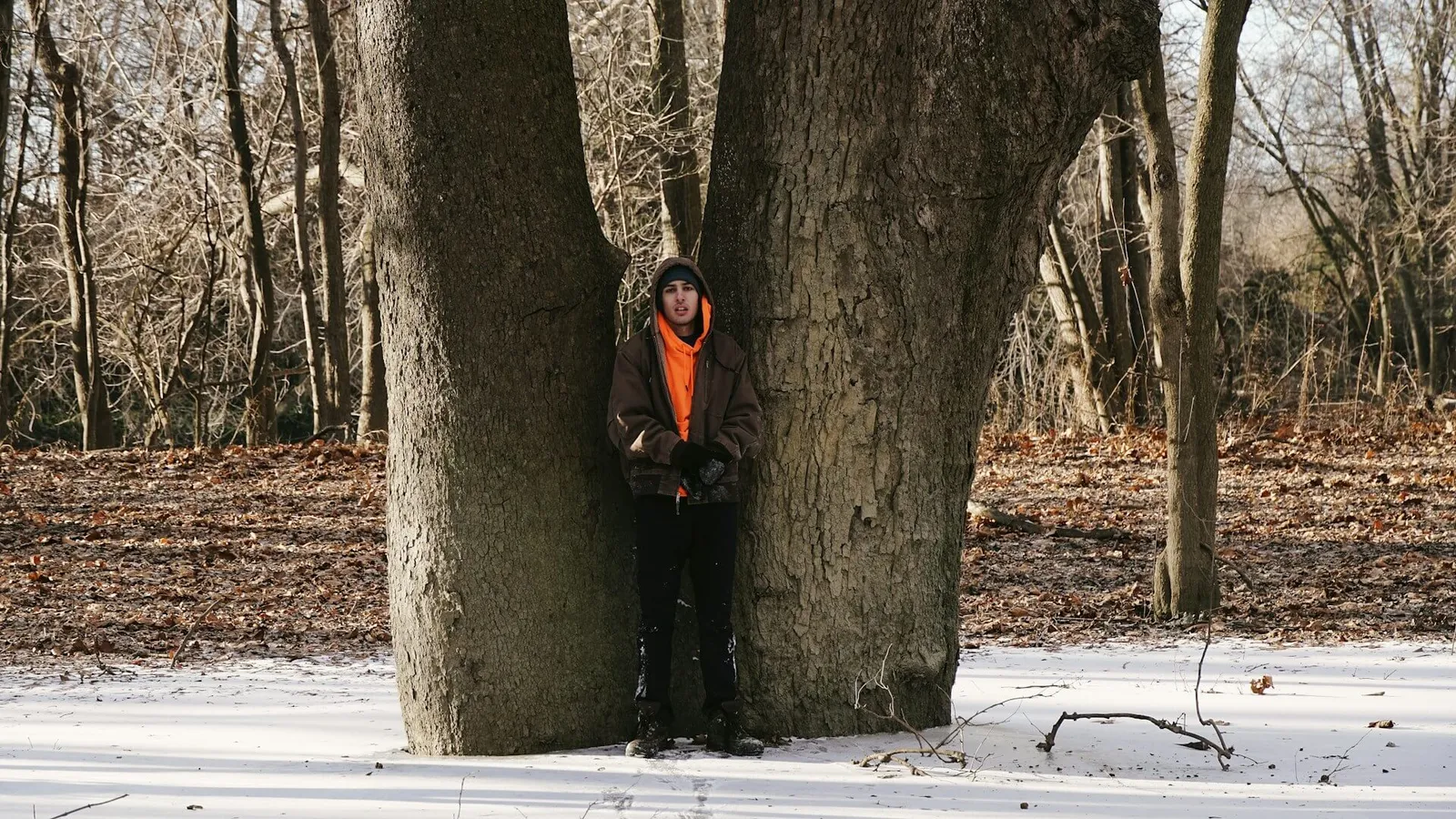
In February 1981, a nine-year-old boy called Jimmy Beveridge got separated from his family on Palomar Mountain, northeast of San Diego. Searchers found him four days later, near a tree. He had died of hypothermia.
One of the searchers was Ab Taylor, a Border Patrol tracker. Afterwards he and others put together a programme for children called Hug-a-Tree and Survive. Its main rule is in the name. If you are lost, pick a tree or a big rock and stay with it. "A child who stays in one place is found far faster than one who keeps moving," the San Diego Mountain Rescue Team says. The programme also tells children to make noise and answer when people call their name. "Nobody will be angry with you." In 2005 Taylor handed the programme to the National Association for Search and Rescue.
Wait for Mommy
In 1976 the mathematician Steve Alpern ended a talk in Vienna with a puzzle. Two friends want to meet at one of several Vienna cafés, but they never agreed which one, and they cannot call each other. How should they choose? He called it the Mozart Café problem. It became the rendezvous search problem, and mathematicians still publish on it.
If the two friends can agree on roles first, the best plan has a nickname: "Wait for Mommy." One person (the Baby) stays at one café. The other (the Mommy) visits every café until they meet. With three cafés and one visit a day, they meet in two days on average. If they have to follow the same rule because they never agreed on roles, the best possible average is two and a half days. Richard Weber proved that in 2012 for the three-place case.
| Three cafés, one try per day | Average days to meet |
|---|---|
| Roles agreed: one waits, one looks | 2 |
| No roles: both use the best shared rule | 2.5 |
| Both pick a café at random each day | 3 |
The gain comes from deciding before anyone is lost. A 2016 paper by Pierre Leone and Alpern adds a rescuer who can leave a "gift" for the lost person, such as water or a note. On a straight path, one gift cut the average time to finish by about a fifth. The plan only works because both players agree their moves before the start.
Where lost people turn up
Most lost people do not stay put, so search teams plan around what they do instead. William Syrotuck first sorted a few hundred search records into types of lost person. Robert Koester took the idea much further. He gathered more than 50,000 cases into the International Search and Rescue Incident Database. His 2008 book Lost Person Behavior gives typical distances and habits for 41 types of lost person. These are some of his findings, as Undark reported:
| Lost person | What they tend to do | Where they are usually found |
|---|---|---|
| School-age children | Take a shortcut | Within a mile of where they were last seen; over half in a building, yard or car |
| Hikers | Head downhill | Streams are the most common place hikers are found |
| Cross-country skiers | Keep moving to stay warm | More than twice as far out as hunters or children |
In 2015 Matt Jacobs looked at the area within about 2 kilometres of where people in the database were found. Between 60 and 80 percent were near a ridge, road, trail, stream, or a high or low point. Compared with a random spot in that area, injured people were 12 times more likely to be found where a stream meets a trail. They were 7 times more likely on a trail.
For the people looking, that means starting with the paths the lost person would naturally follow from the last place you saw them. For the person who is lost and decides to move, it means keeping to something obvious: the main path, the river, or the high street. Avoid open ground where nobody would think to look.
Agree on it before you split up
In a city the worst case is two people looking for each other at once. You lose a friend at a busy market. You both turn round and walk to where you think the other one went. You both ring at the same moment and get voicemail. That is the rendezvous problem with no roles.
The search-and-rescue rule fixes this when it is agreed in advance. If anyone gets separated, they go back to the last place the group was all together and wait there. The rest of the group comes to them. Pick a spot you can describe in a few words, like the main entrance or the fountain. Say it out loud so everyone has heard it. At a theme park, the same plan works for groups with small children, as we cover in Avoid Losing Your Group at Disney or Universal Theme Parks.
When to call for help
If a child is missing in a park, a shop or a crowd, tell staff or security at once. Do not wait to finish searching yourself. On a trail or a mountain, call the emergency number (911 in the US, 112 in Europe) as soon as someone is overdue and not answering. Search teams would rather be called early. If you are the one who is lost and have signal, call too. Then stay where you are and keep your phone's battery for that call.
What a shared map changes
A live map removes the guessing when phones are working. In OnTime, the person who is lost sees where the group is, and the group sees them, for as long as the Radar runs. It does not help when a phone is dead or has no signal, and it cannot tell a child without a phone where to stand.