
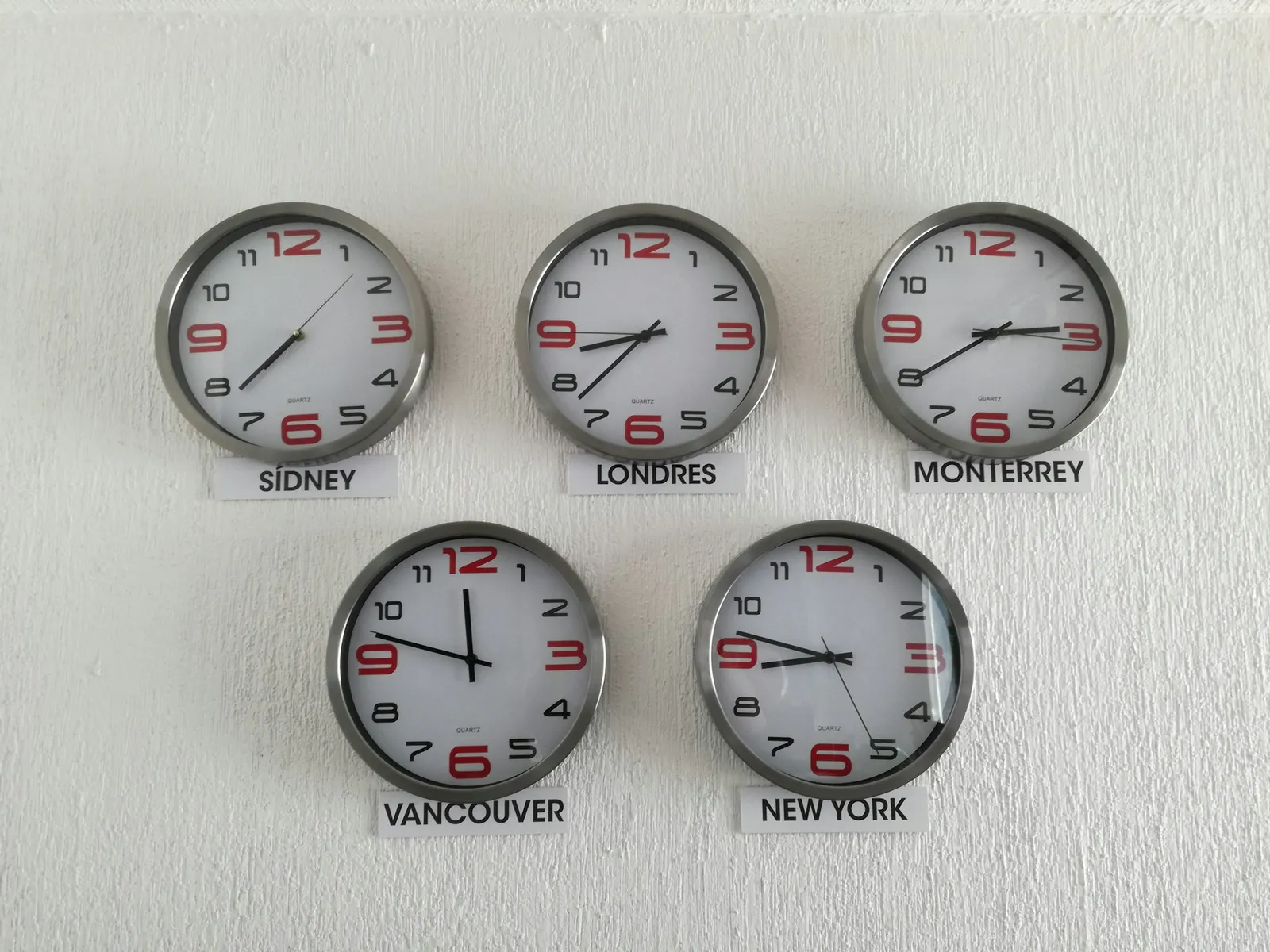
When the psychologist Robert Levine started teaching in Brazil in the 1970s, his 10 a.m. class did not start at 10. Students were still walking in at 11, and few of them apologised. Nobody hurried out at the end either. Levine later spent much of his career measuring how cultures treat time, and that first class is where it started.
His research is still the most useful starting point for a simple question: how late is "late"?
Two definitions of late
Levine's first study on this, published in 1980 with colleagues, compared university students in Brazil and the United States. Students answered questions about when someone counts as early or late for a lunch meeting, and how they would explain being late.
The two groups did not just tolerate different delays. They read lateness differently. The American students mostly saw a late person as less reliable or less in control. The Brazilian students were far more flexible about when "late" began, and some saw a person who is always late as more successful, because busy people are expected to be late.
That second point is the one that causes trouble in mixed groups. The friend who arrives 30 minutes after the agreed time may not think they are late at all. The friend who waited may think they were insulted.
Measuring a whole city's pace
In the 1990s, Levine and Ara Norenzayan measured the "pace of life" in a large city in each of 31 countries. Their 1999 study used three tests:
- How fast people walked 60 feet alone on a downtown street on a clear morning.
- How long a post office clerk took to sell a stamp and give change.
- How accurate the clocks were in 15 randomly chosen downtown banks.
Switzerland came first overall and first for clock accuracy. Ireland had the fastest walkers and came second. A few other results:
| Country | Overall pace rank (of 31) |
|---|---|
| Switzerland | 1 |
| Ireland | 2 |
| Japan | 4 |
| United States | 16 |
Western European countries and Japan filled most of the top places. The slowest were mostly in Latin America, the Middle East and less industrialised parts of Asia. Richer, colder and more individualistic countries tended to be faster.
A city's clock accuracy is not the same as a person's punctuality, and the study is now more than 25 years old. It does show one useful thing: how precisely a place treats time is part of its culture, not just a habit of a few people.
Clock time and event time
Researchers often split cultures into "clock time" and "event time". In clock time, a meeting starts at 7:00 because the clock says so. In event time, it starts when the people are ready, and the previous conversation is finished. Neither is wrong. A dinner in Madrid that starts at 9:45 for a 9:00 booking is not chaos. A train in Zurich that leaves 2 minutes late is a news item.
Inside one country the rules change too. The same person may be exact for a job interview and relaxed for a friend's party, and the right delay for a party differs between cities. That is why "be on time" is a weak plan for a group from several places. Everyone agrees, and each person means something different.
Planning a meetup across cultures
The fix is to remove the guessing. A few habits help:
- Say what kind of time you mean. "Dinner at 8, the table is booked" gives a hard start. "Come by from 8" gives a window.
- Split the plan into a meeting time and an activity time. "Meet at 7:30, the film starts at 8" lets the relaxed friends be relaxed without missing the film.
- Agree on how long people will wait. "If you are not there by 8:15, we will go in and save you a seat" is clearer than any lecture about punctuality.
OnTime takes out the other half of the guessing. The group joins a Radar for the evening, with the restaurant or cinema as a stop. People waiting can see that the late friend is two streets away, or that they have not left home yet. Nobody has to decide whether 20 minutes is rude. The map shows where everyone is, and the group can decide whether to wait.