
In the 1950s the economist Thomas Schelling asked his students a strange question. You have to meet a stranger in New York tomorrow. You don't know each other, and you can't get in touch first. Where do you go, and when? Most of them gave the same answer: noon, at the information booth in Grand Central.
Schelling used the result to explain what game theorists now call a focal point: when people can't talk to each other, they still often pick the same answer, because some answers stand out. He wrote it up in The Strategy of Conflict in 1960. Grand Central wasn't the best place to meet in any practical sense. It was just the place everyone expected everyone else to pick.
The idea came from a day he spent lost. In a 2005 interview with the Richmond Fed, he said he was driving across the US with two friends when they stopped in San Antonio. One went into a shop, a police officer made Schelling move the car, and the one-way streets meant it took him about ten minutes to get back. His friend was gone. They found each other in the end, but it made them think about what to do the next time. Each of them thought about it alone that afternoon, and at the campfire that evening they compared answers. They had all picked the same place.
Their rules were simple. Every city had to have the place, and only one of it. You had to be able to ask any police officer or firefighter how to get there. You had to be able to reach it by public transport. That left the town hall, the main police station or the main post office. They chose the post office, because they'd already told their mothers to send letters there.
Railway stations meet those rules better than almost anywhere, and the biggest ones each grew their own spot.
Grand Central, New York
The clock sits on top of the information booth in the middle of the Main Concourse, and the terminal opened in 1913. "Meet me at the clock" is the line New Yorkers use, though Untapped New York points out that the phrase may have started with the clock at the Hotel Astor in Times Square. The same article takes apart a popular story that the four faces are carved from opal and worth millions. They're opal glass, and one of the old faces, damaged in 1968, now sits in the New York Transit Museum's collection.
Waterloo, London
The four-faced clock that hangs over the concourse was made by Gents of Leicester and, according to Network Rail, probably dates from the 1920s. In 2010 Network Rail took the clock down for restoration and told travellers to "arrange an alternative meeting place while the work is carried out."
Flinders Street, Melbourne
The row of indicator clocks over the main entrance shows when the next train leaves for each line. Melbourne historians call the spot below them a "time-honoured central city meeting place". For decades someone changed the clocks by hand with a long pole, up to 900 times in an eight-hour shift. They're automated now, and "under the clocks" is still how people in Melbourne say where to meet.
Hachikō, Shibuya
The meeting spot here is a dog. Hachikō waited at Shibuya Station for his owner every day for years after the owner died, and a bronze statue of him went up outside the station in April 1934, with Hachikō there for the unveiling. The statue was melted down for metal during the Second World War. The sculptor's son, Takeshi Andō, made the one that has stood there since August 1948, and the station exit next to it is called Hachikō-guchi, the Hachikō exit.
Why a clock
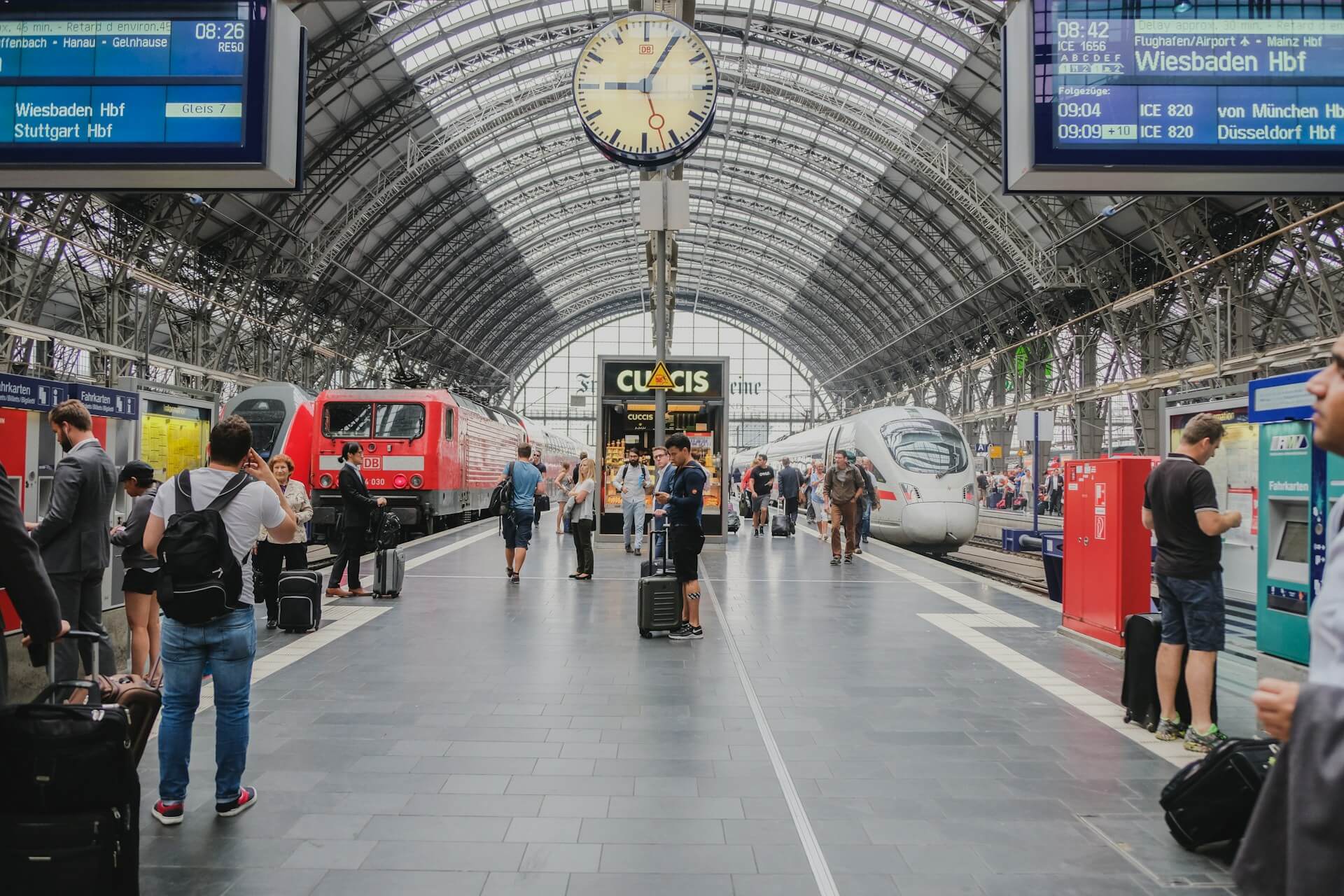
Put the four next to Schelling's campfire rules and they fit. A city has one main station, and a station has one big clock. Anyone can tell you how to get there. The clock hangs high enough to see from across the concourse, so you can find it when you can't see the person you're meeting. It also answers the question every person who's waiting asks: how late are they?
The famous spots all have a small catch. They're too popular. On a Friday evening at Waterloo, "under the clock" means a crowd of people all looking at their phones, and Hachikō has the same problem. A meeting point works best when it's obvious to your group and not to anyone else.
What changed
Schelling noticed the change himself. In the 2005 interview he explained that his 1950s students said Grand Central for a reason: most of them were at single-sex colleges in New England, so a date usually meant meeting in New York, and every train from New England arrived at Grand Central. "Now when I try it on students," he said, "they almost never give that response."
Phones took away most of the need. Nobody has to guess the meeting place with no way to call, because you can text the plan and change it ten times. A meeting point has to be good enough for the last few minutes, the part where you're both in the same building and still can't see each other.
We built OnTime for those last few minutes. You drop a pin where you'll be, and everyone in the group sees each other's dot moving toward it. The clock is still a good choice for where to put the pin.