
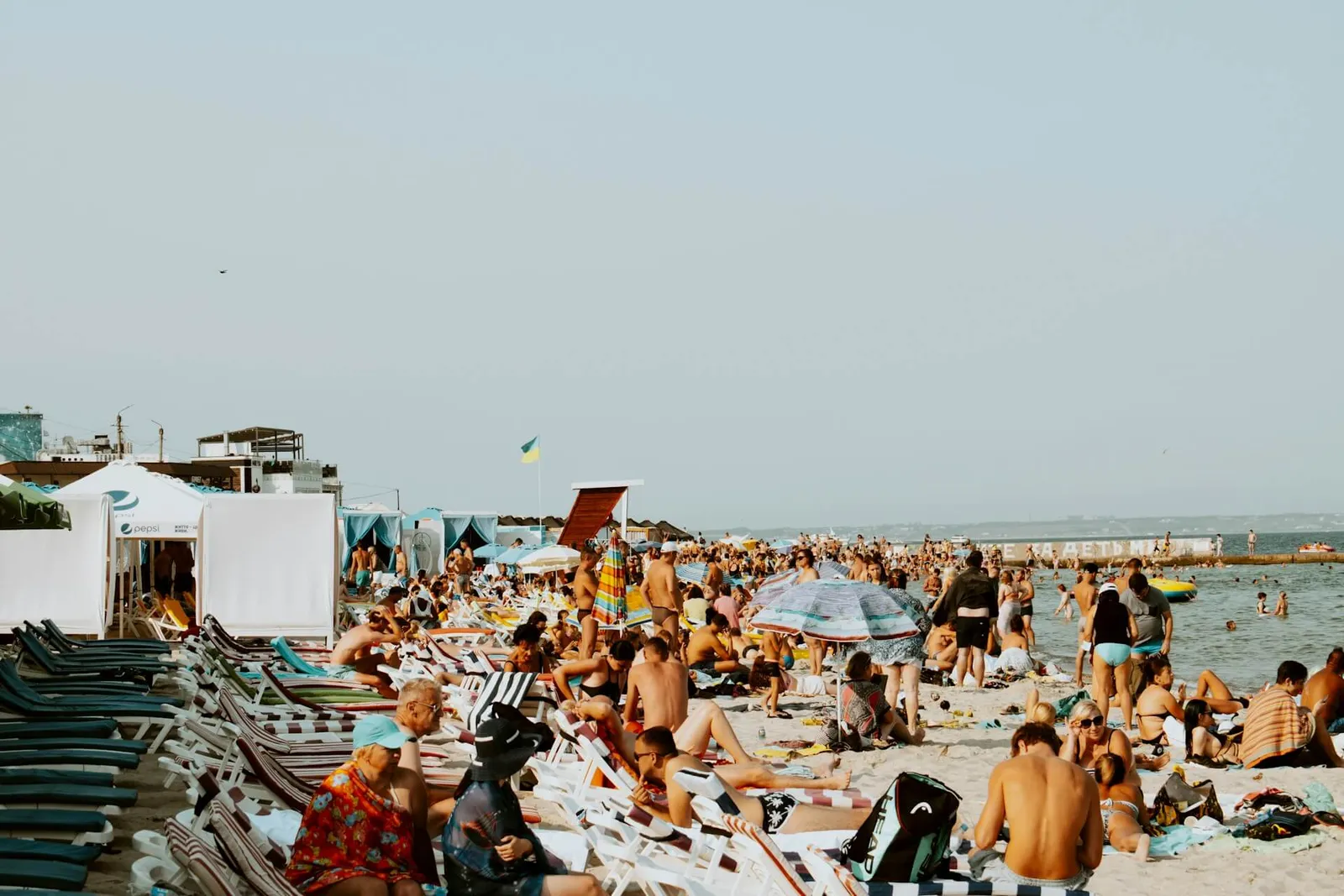
"We're near the blue umbrella" is the classic beach message, sent to a friend who is standing at the top of the sand looking at about four hundred blue umbrellas. A long beach has no addresses, no street names and almost nothing that doesn't repeat every hundred metres.
The people whose job is to find someone on a beach dealt with this a long time ago, and how they did it is useful for the rest of us.
How beaches give themselves addresses
The Dutch coast has numbered posts. The strandpalen were set up in the 19th century by the hydraulic engineer Jan Blanken and run from post 0 at Huisduinen to post 117 at Hoek van Holland. They were placed to measure how much sand the sea took away each year, and that job went digital around 1990. They're still kept up because, as a local paper in Den Helder put it in Dutch, they're still very important for locating people, "and certainly for the emergency services". On a Dutch beach, "we're by post 103" is an address.
Western Australia did something similar on purpose. Its Beach Emergency Numbers are green and red signs at beach access points, boat ramps and paths, each with a unique code that emergency services can look up. Someone calling for help reads out the code instead of trying to describe a stretch of sand.
Lifeguard towers do the same job on a lot of beaches. Los Angeles County's towers are numbered. Miami Beach went further: its 36 lifeguard towers, designed by the architect William Lane, come in different shapes and colours, so they're easy to tell apart from a distance.
If your beach has any of these, use them. "Twenty metres left of tower 17, towards the water" gets a friend much closer than "near the blue umbrella".
Drop a pin where you're sitting
Most beaches don't have numbered posts, and even with one, the last bit is hard. Every group of towels looks alike from fifty metres away.
When you've picked your spot, add it as a stop on a Radar and send it to the friends who are coming later. Each of them sees the stop on the map and their own dot as they walk towards it, along with the distance left. From the car park, they can see whether you're a two-minute walk to the left of the main entrance or a fifteen-minute walk to the right, which decides whether they take the beach path or the promenade.
Everyone already on the beach shows up too. So if half the group has gone for a swim and the other half is at the café, the friend arriving can see that before walking all the way to an empty pile of towels.
When you move
Beach groups move. The tide comes in, the shade moves, someone finds a better spot. The stop stays where you first put it, but your dot moves with you. Tell the group you've moved, and anyone still on the way can walk towards your dot instead of the old pin.
When people arrive at different times
This is where a pin helps most. On a beach day, people rarely turn up together. One friend comes after work, another after lunch, and someone gets the later train. Without a pin, each new arrival sets off a round of calls, with everyone on the beach standing up and waving at the wrong person.
With a Radar running all afternoon, each late friend can find the group without anyone having to look up from their book. Give it an end time after you'll have left, so it covers the walk back to the car. Then the sharing ends on its own.
Phones on a beach also get sandy, wet and hot, so it's worth agreeing on a backup: the nearest numbered post or tower, said once in the group chat before anyone arrives.