
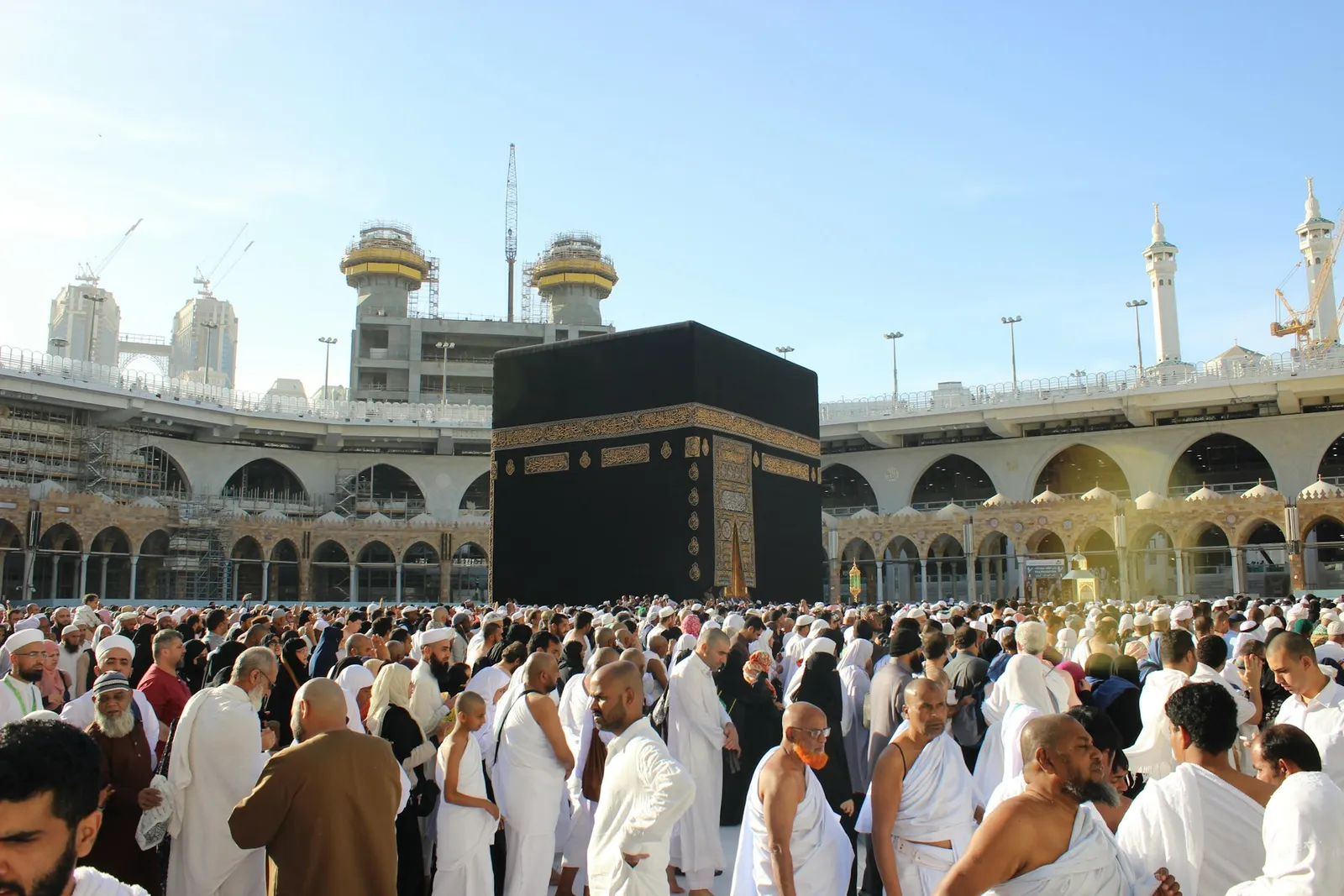
In 2025, according to the Saudi statistics authority GASTAT, 1,673,230 people performed Hajj. In some years before that the number passed two million. They travel on the same days between the same few places: Mecca, the tent city of Mina, the plain of Arafat and Muzdalifah. Most of them are in a foreign country, many are elderly, and many do not read Arabic. Groups get split up every year, and most of them find each other again.
The methods they use are low-tech. Most of them would work at any very large event.
A group you can see from a distance
Pilgrims usually travel in groups run by a licensed operator, and each group has a leader. Leaders often carry something tall: a flag on a pole, a sign with the group's name, an umbrella in an unusual color. In a crowd where most men wear the same two white sheets of the ihram, that object is the only thing you can spot from fifty metres away.
Many groups also wear something that matches. It may be a scarf or a bag in one color, or a badge with the name of the agency or the country. It does not help you find one person. It tells a lost pilgrim which crowd of strangers belongs to their group, and it tells helpers which operator to call.
A fixed address in a temporary city
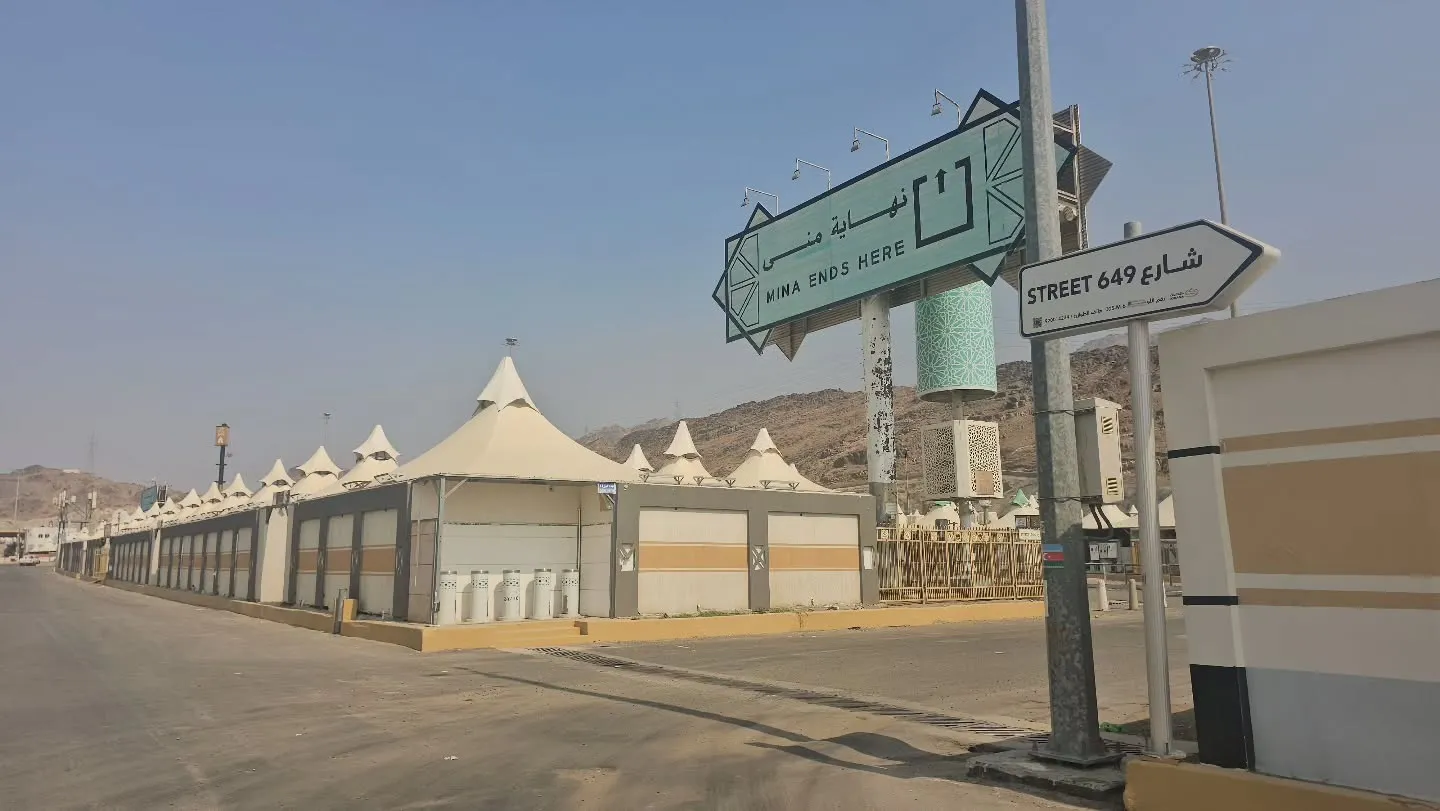
Mina is a valley of tens of thousands of identical white tents. For a few days each year it holds more people than most cities. To make it navigable, the camps are divided into numbered blocks. Each group belongs to a maktab, an office with a number, and each camp has a sign at its entrance with the maktab number, the street and the camp details.
Pilgrims are told to photograph that sign on the first day. If they get lost, the address is in their pocket. Anyone who helps them, from a security officer to a volunteer, can read it and walk them back.
This is the most transferable idea in the whole system. A meeting point works best when it is fixed, written down and specific. "By the stage" is a direction. "Camp 47, street 12" is an address.
Wristbands that answer for you
Most operators give each pilgrim a wristband with their maktab number and camp details, and many camps check wristbands at the door. Some bands carry a barcode. Scouts and volunteers have scanned them to pull up a pilgrim's record and find their tent.
The wristband matters most for people who cannot explain where they are staying. That includes elderly pilgrims who are tired or confused, and pilgrims who share no language with the person helping them. In 2022 the Hajj ministry also handed out wristbands for children with a guardian's contact details.
Someone whose job is lost people
The last piece is a network of helpers who expect to meet lost pilgrims. Saudi scouts and volunteers run guidance points, and each area has places where separated pilgrims are taken. Pilgrims are told to go to a guide or a security officer, show their maktab number, and stay put. They are not told to search the crowd on their own.
Staying put sounds passive. In a crowd that size it is the only thing that works, because two people searching for each other keep missing. One person waits, the other comes.
What other crowds can borrow
A festival, a marathon or a big city parade is much smaller than Hajj, but the same four things apply:
- Something tall or bright that the group can spot.
- An address for the meeting point, written down, not just a direction.
- A card or wristband on anyone who might not be able to explain where to go, including kids and older relatives.
- A rule for getting lost: stay where you are, find an official, and let the others come to you.
A shared live map adds a fifth. With OnTime, a group joins one Radar for the day, and each person can see where the others are. The meeting point can be a stop on the map with its exact location. It only works for people with a charged phone and a signal, and in a crowd this size, networks slow down. The wristband and the written address keep working when the phone does not.