
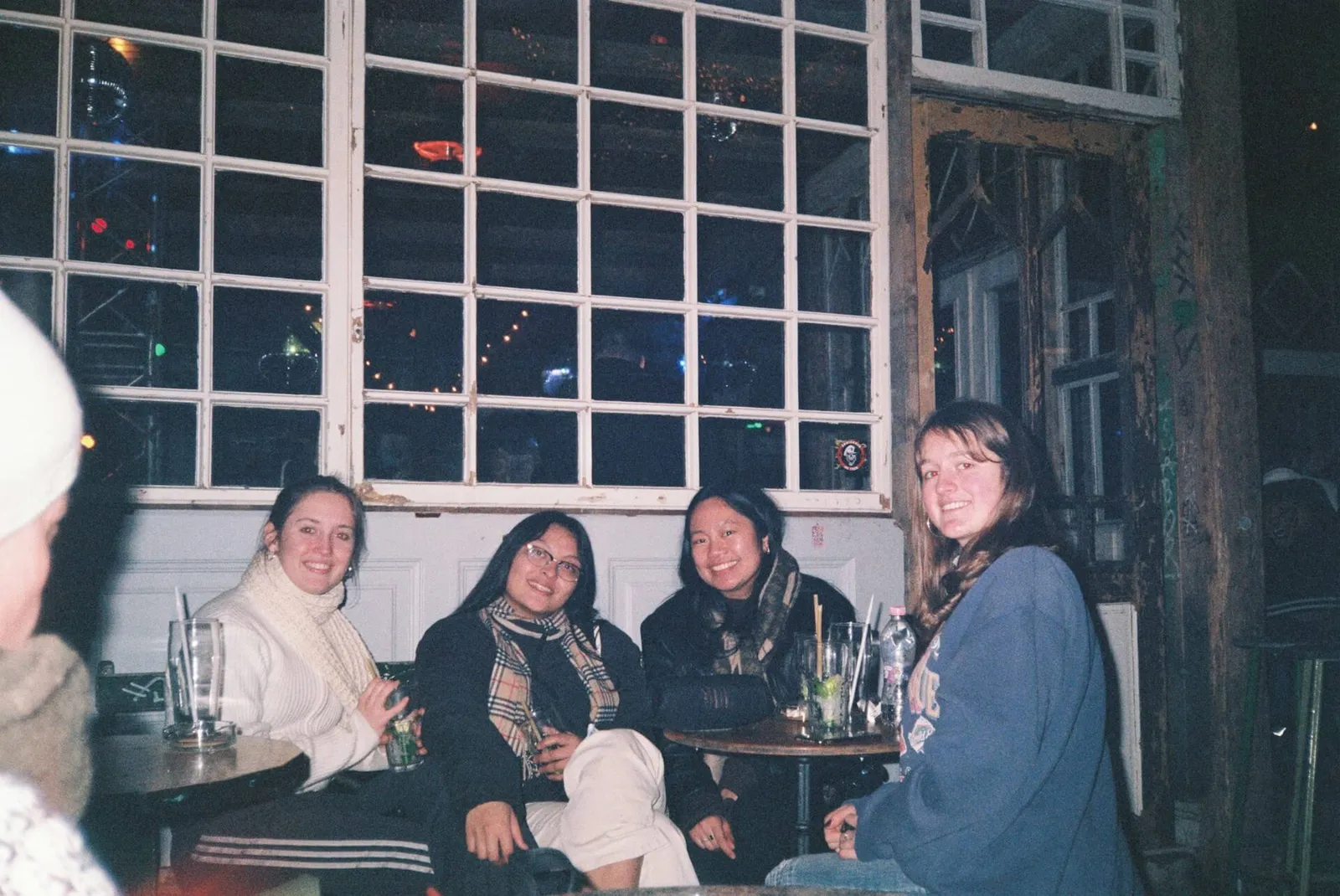
The part of a night out people worry about most is usually the last half hour, after the group splits up. In Australia's 2021–22 Personal Safety Survey, 93% of men said they felt safe waiting for public transport alone after dark. Only 68% of women did. In a 2022 survey in Great Britain, 82% of women said they felt unsafe walking alone through a park or open space after dark, compared with 42% of men.
So groups of friends have a habit for the end of the night: "text me when you're home." Universities tell students much the same. King's College London's advice to students is to "stay together and make sure that everyone gets home safely."
Why the text doesn't quite work
"Text me when you're home" depends on the person getting home remembering to send it, and on the people waiting staying awake to read it. At 2am both are unreliable.
Picture a group of five leaving a bar. Two share a taxi, one gets the night bus, one walks, and one decides to go on to a friend's party. Within an hour, three people have sent "home x" to the group chat. The one who walked fell asleep without texting. The one at the party is fine but busy. The people still awake now can't tell whether a missing message means asleep, dead phone, still out, or something wrong, so they either worry or ring someone who's asleep.
The text also only comes at the end. It doesn't tell anyone that the night bus went the wrong way, or that the walk home is taking forty minutes instead of fifteen.
The map at the end of the night
We'd suggest setting up a Radar before you go out, while everyone's still together and sober. Put the end time at around midday the next day, so it covers the latest finish and the slowest morning, and everyone joins. There's no need to add stops. For this, the map is just everyone's dot and the end time.
For most of the night nobody looks at it. It matters once the group splits up. Whoever is the last one awake, or the friend who said they'd keep an eye out, can see each dot moving away from the bar in a different direction. When the taxi dots stop at their flats and the bus dot stops near its stop, that's most of the group home without anyone having to text. The walker's trail shows they made it too, even if they fell asleep without saying so. If a dot stops halfway home and stays there, or heads somewhere nobody expected, that's the one to ring.
The friend who goes on somewhere
The person who went on to the party also shows up on the map, at the party, so nobody needs to wonder. If they'd rather the group didn't see where they're going next, they can leave the Radar. Agree that leaving is fine and just say so in the chat, so nobody mistakes it for a phone dying.
At midday the Radar ends and everyone's location stops being shared, which is one less thing to think about with a hangover.
Agree on a couple of things first
A shared map only helps if someone actually looks at it. Decide who that is before you split up. It doesn't have to be the most sober person, just the one who'll be awake longest and answers calls.
It's also worth saying out loud what counts as "home" for each person. If someone's staying at their partner's place, the friend checking the map shouldn't panic when the dot goes to a different part of town.
And keep the group chat. The map tells you where everyone is. It doesn't tell you how they are, and "home x" from a friend at 2am still says something a dot can't.